Text size
Line height
Text spacing
Content (temporary)
The MariTech Talent Programme is a challenge-driven skills initiative that develops twin transition INTRApreneurship capabilities for the maritime sector. It brings together maritime professionals, ports, SMEs, and innovative enterprises with concrete digital and sustainable solutions in a structured two-way learning experience, where real operational challenges shape both the learning process and the solutions explored. Rather than offering training in isolation, the programme is built around the most pressing needs identified directly by maritime companies and port organisations, ensuring relevance, applicability, and immediate value.
What sets MariTech apart is its challenge-based INTRApreneurship model, which nurtures learning by doing. Mixed teams of maritime professionals, deep-tech start-ups, scale-ups, and SMEs work together to explore, test, and apply innovative solutions, supported by targeted training along the way. This collaborative approach is complemented by the MariTech Collaboration Node, a dedicated digital platform that provides access to training materials, webinars, recorded sessions, and curated resources, enabling participants to continue learning, reflecting, and exchanging knowledge beyond individual activities. For participants who wish to formally recognise their learning, the programme also offers the option to follow selected activities in a micro-credential course format.
The course equips participants with tools to analyse operational challenges within maritime organisations, interpret international and European maritime regulations, and evaluate sustainable and digital innovation strategies. Key thematic areas include sustainability and circular economy regulations, digital transformation and cybersecurity, emerging maritime technologies, and financing and procurement processes. Learning activities are grounded in systems-thinking and problem-based learning approaches, encouraging critical reflection and practical application.
Learning is supported through self-paced asynchronous materials hosted on a dedicated digital platform, complemented by collaborative workshops, expert sessions, peer discussions, and experiential industry engagement. The course culminates in a project-based assessment in which participants develop and present a report, demonstrating how insights from the programme can be applied within their own organisational context.
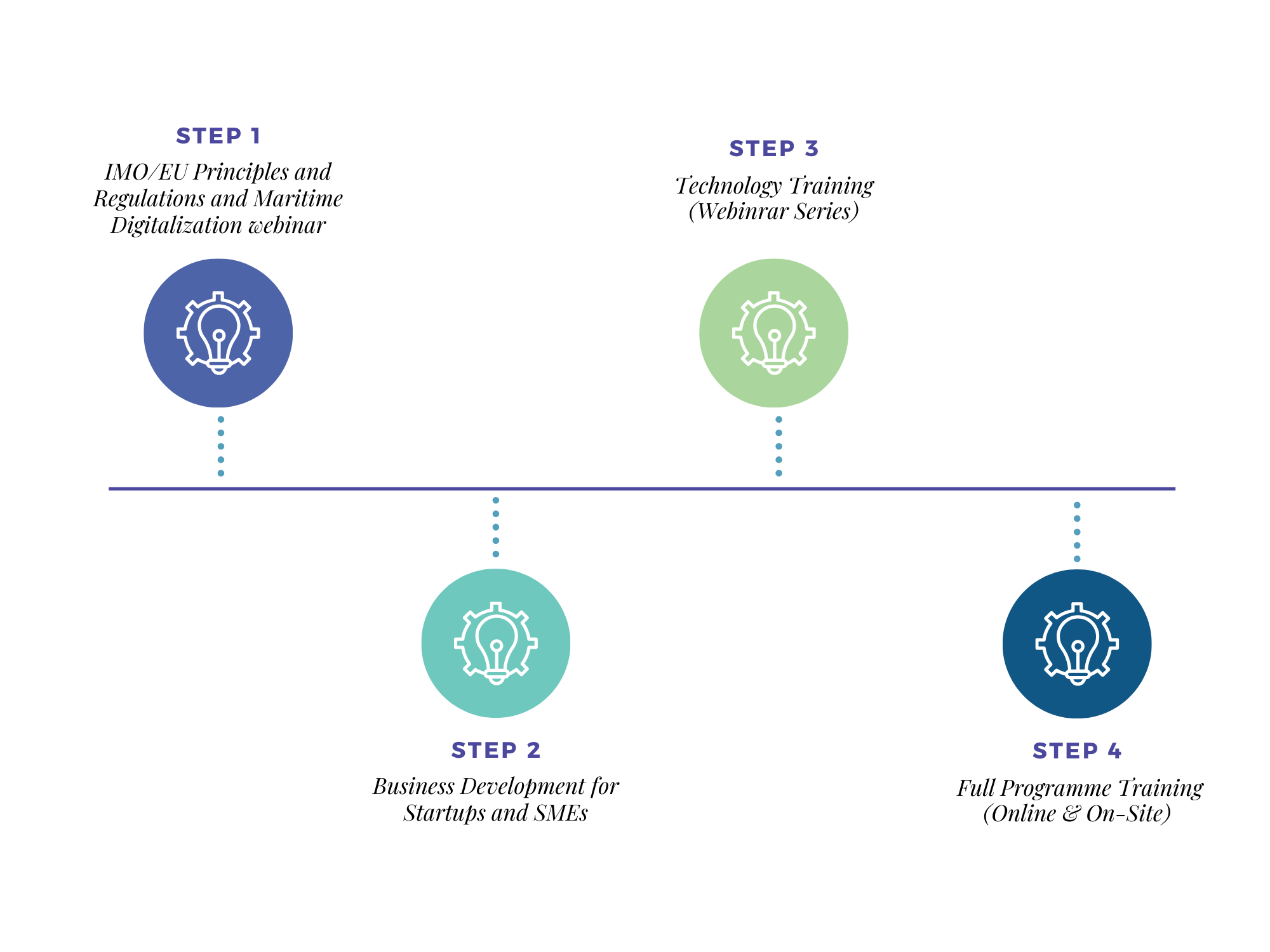
By the end of the course, participants will be able to:
The course is delivered in a blended format over a two-week period, combining online and face-to-face learning activities. It comprises a total of 24 learning hours, structured as follows:
This blended delivery model supports flexibility while ensuring meaningful engagement through experiential, collaborative, and industry-focused learning activities.
Assessment for this micro-credential is based on active participation and applied learning, reflecting the course’s experiential and practice-oriented design. Participants are assessed through the following components:

